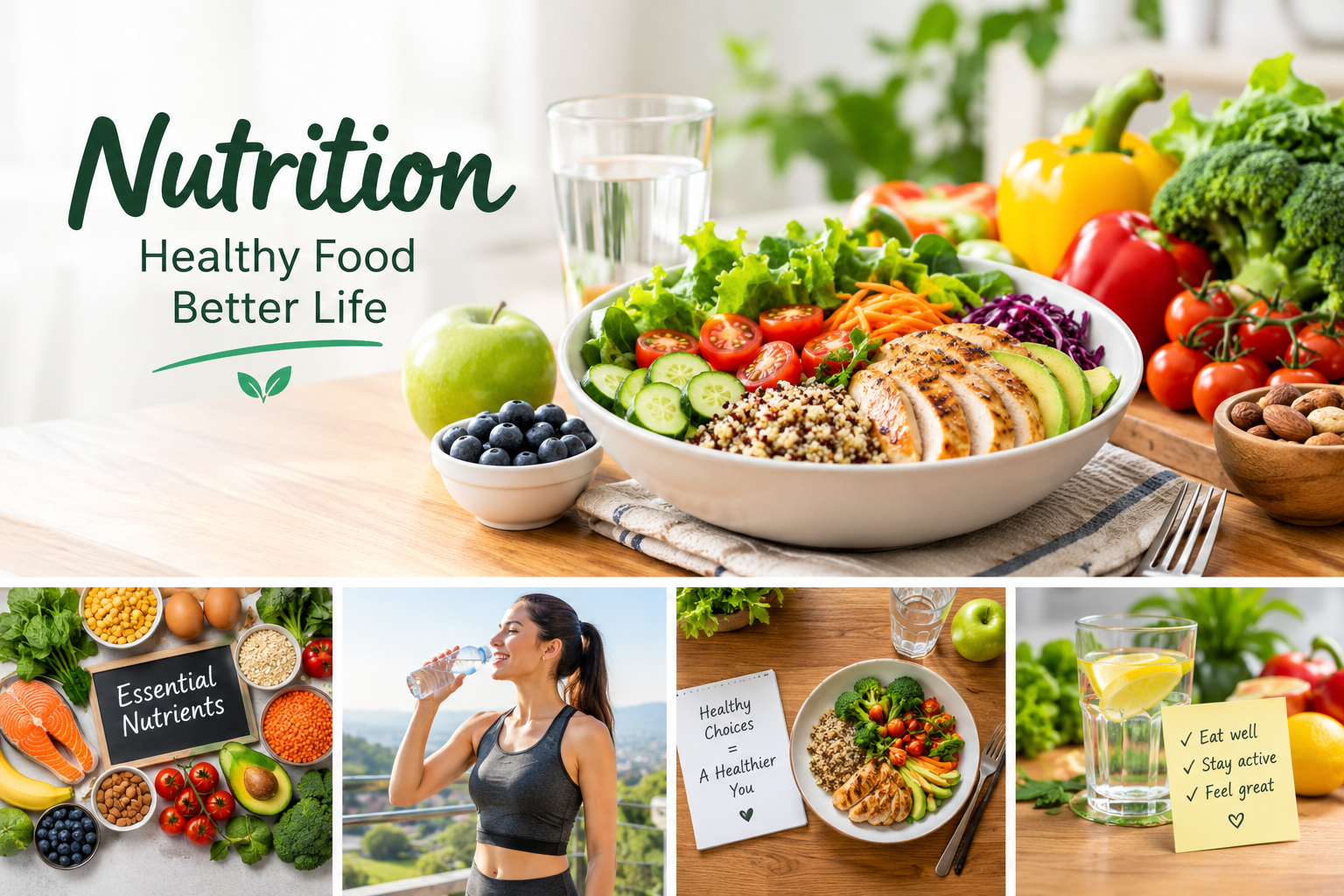
Nutrition: A Complete Guide to Healthy Eating and Better Health
Introduction to Nutrition
Nutrition is one of the most important parts of a healthy lifestyle. Good nutrition provides the body with the essential nutrients it needs for energy, growth, muscle repair, and overall health. A balanced nutrition plan can help people maintain a healthy weight, support their immune system, and improve their daily performance.
In today’s busy world, many people depend on fast food, sugary drinks, and processed snacks. These eating habits can make it difficult to get the nutrients the body needs. Understanding nutrition and making healthier food choices can help you build a healthier lifestyle and reduce the risk of certain long-term health problems.
What Is Nutrition?
Nutrition is the process through which the body receives and uses nutrients from food. These nutrients support important functions, including digestion, energy production, tissue repair, and the maintenance of healthy bones and muscles.
A healthy nutrition plan includes a variety of foods, such as fruits, vegetables, whole grains, protein-rich foods, and healthy fats. Good nutrition does not mean following a strict diet or avoiding all your favorite foods. Instead, it means eating a balanced variety of foods in appropriate amounts.
Learning about nutrition can help you understand what your body needs and make better decisions about your daily meals.
Essential Nutrients for Good Nutrition
The body requires several essential nutrients to maintain good health. Each nutrient plays a different role in supporting normal body functions.
1. Carbohydrates
Carbohydrates are the body’s main source of energy. They help fuel daily activities, exercise, work, and study. Healthy carbohydrate sources include oats, whole-wheat bread, brown rice, potatoes, fruits, and beans.
For better nutrition, choose whole grains and fiber-rich foods more often than foods high in added sugar.
2. Protein
Protein is essential for building and repairing muscles, supporting the immune system, and maintaining body tissues. It is particularly important for people who exercise regularly.
Good protein sources include eggs, fish, chicken, milk, yogurt, beans, lentils, and chickpeas. Including protein in a balanced nutrition plan can also help you feel satisfied after meals.
3. Healthy Fats
Healthy fats provide energy, support cell function, and help the body absorb vitamins A, D, E, and K. Nuts, seeds, olive oil, avocados, and oily fish are useful sources of healthy fats.
Good nutrition involves choosing healthier fat sources and limiting trans fats and excessive saturated fat.
4. Vitamins and Minerals
Vitamins and minerals are essential for maintaining a healthy body. Calcium supports strong bones and teeth, iron helps produce healthy red blood cells, and vitamin C supports normal immune function.
Fruits, vegetables, dairy products, legumes, nuts, and whole grains provide different vitamins and minerals. Eating a variety of these foods improves the quality of your nutrition.
5. Fiber
Fiber supports digestion, helps prevent constipation, and may help manage cholesterol and blood sugar levels. Foods rich in fiber include fruits, vegetables, oats, beans, lentils, and whole grains.
A nutrition plan that includes enough fiber can also help you feel full for longer and support healthy weight management.
6. Water
Water is essential for digestion, temperature regulation, and the transportation of nutrients throughout the body. Drinking water regularly is an important part of good nutrition.
Your daily fluid needs depend on your activity level, climate, and individual health needs. Choose water more often than sugary drinks to support a healthy lifestyle.
Benefits of Good Nutrition
Good nutrition provides many benefits that support physical and mental well-being.
Supports healthy weight management: Balanced nutrition helps you meet your body’s needs while managing your overall energy intake.
Improves energy levels: Eating a variety of nutritious foods provides energy for everyday activities.
Supports immunity: Adequate vitamins, minerals, protein, and other nutrients help maintain normal immune function.
Promotes digestive health: Fiber-rich foods and sufficient fluids support healthy digestion.
Supports heart health: A diet rich in vegetables, fruits, whole grains, legumes, and unsaturated fats can benefit cardiovascular health.
Strengthens bones and muscles: Protein, calcium, vitamin D, and other nutrients support muscle function and bone health.
Supports brain function: Good nutrition provides the energy and nutrients needed for concentration, learning, and normal brain function.
How to Improve Your Daily Nutrition
Improving nutrition does not require expensive foods or complicated meal plans. Small changes in your everyday eating habits can make a difference.
Eat More Fruits and Vegetables
Fruits and vegetables contain vitamins, minerals, fiber, and other beneficial compounds. Try to include different types in your meals every day. Fresh, frozen, and appropriately prepared canned varieties can all contribute to a healthy diet.
Choose Whole Grains
Whole grains provide fiber and important nutrients. Choose oats, brown rice, and whole-wheat bread more often. Whole-wheat roti can also be part of a balanced nutrition plan when combined with vegetables and protein-rich foods.
Include Protein in Your Meals
Add eggs, fish, chicken, lentils, beans, chickpeas, or yogurt to your daily meals. Eating a variety of protein sources helps improve the nutritional quality of your diet.
Reduce Added Sugar
Too much added sugar can contribute to excessive calorie intake and increase the risk of certain health problems. Limit sugary drinks, sweets, and highly sweetened snacks.
Drink Enough Water
Proper hydration supports many essential body functions. Keep water available throughout the day and drink more when your activity level or the weather increases your fluid needs.
Nutrition for Healthy Weight Loss
Nutrition plays an important role in healthy weight loss. A balanced diet can help people manage their weight without relying on extreme restrictions or unhealthy dieting methods.
A healthy weight-loss nutrition plan should include vegetables, fruits, whole grains, protein-rich foods, and appropriate portions of healthy fats. Foods containing protein and fiber may help control hunger and improve meal satisfaction.
A calorie deficit occurs when the body uses more energy than it receives from food and drinks. However, consuming too few calories can lead to fatigue, muscle loss, and nutritional deficiencies. Sustainable weight loss is generally better supported by balanced eating habits and regular physical activity.
Avoid crash diets, unverified weight-loss products, and plans that eliminate entire food groups without a medical reason. If you have a medical condition or special dietary requirements, consult a qualified healthcare professional for personalized nutrition advice.
Common Nutrition Mistakes to Avoid
Many people try to improve their nutrition but follow habits that make healthy eating more difficult.
Skipping meals unnecessarily: Skipping meals is not required for weight loss and may leave some people excessively hungry later.
Avoiding all fats: Healthy fats are essential for normal body functions. Choose nutritious fat sources and appropriate portions instead.
Following extreme diets: Highly restrictive eating plans can make it difficult to obtain all essential nutrients.
Eating too much processed food: Frequent consumption of foods high in added sugar, salt, and unhealthy fats can reduce overall diet quality.
Ignoring food variety: Eating a wide range of nutritious foods helps provide different vitamins, minerals, and other essential nutrients.
Believing misleading nutrition advice: Be cautious of diets and supplements that promise immediate or effortless results.
Simple Nutrition Tips for Everyday Life
Follow these practical nutrition tips to develop healthier habits:
- Include fruits and vegetables in your daily meals.
- Eat a variety of protein-rich foods.
- Choose whole grains more often.
- Drink water regularly.
- Limit foods and drinks high in added sugar.
- Plan your meals before shopping.
- Prepare healthy meals at home when possible.
- Pay attention to portion sizes and hunger signals.
- Read food labels to compare products.
- Combine good nutrition with physical activity and adequate sleep.
You do not need to change everything at once. Start with a few manageable improvements and continue building healthier habits over time.
More Related Nutrition Guides from Fitorax
Explore these related nutrition guides to learn more about balanced eating: