Fitorax • Healthy Living
The Role of Nutrition in Overall Health
How everyday food choices support energy, immunity, digestion, and long-term wellbeing.
Food does much more than satisfy hunger. It gives the body energy, supplies the nutrients needed to repair cells, and supports the many systems that keep us functioning each day. The role of nutrition in overall health is important at every stage of life, from childhood and adolescence to adulthood and older age.
A healthy diet does not need to be complicated or expensive. In most cases, it begins with eating a variety of foods, including vegetables, fruits, whole grains, protein-rich foods, and healthy fats. Building balanced habits over time is more useful than searching for a single “perfect” food or following a restrictive diet.
The key idea
Good nutrition supports the body as a whole. A balanced eating pattern can help meet nutrient needs, maintain energy, support healthy growth, and reduce the risk of some diet-related health problems.
What Is Nutrition?
Nutrition is the process through which the body obtains and uses nutrients from food and drink. Nutrients help provide energy, build and maintain tissues, regulate body processes, and support normal growth and development.
The main nutrient groups include carbohydrates, protein, fats, vitamins, minerals, and water. Fiber is also an important part of a healthy diet because it supports digestive health and helps nourish beneficial gut bacteria.
Why Is Nutrition Important for Overall Health?
1. Provides energy for everyday life
Your body needs energy to breathe, think, move, digest food, and carry out countless other functions. Carbohydrates, fats, and protein provide energy, although each has additional roles. Whole grains, fruits, vegetables, legumes, and other nutrient-rich foods can help supply energy along with important vitamins, minerals, and fiber.
Eating regular, balanced meals may help you feel more prepared for work, study, exercise, and daily responsibilities. Individual energy needs differ depending on age, activity, body size, and health.
2. Supports the immune system
The immune system relies on adequate energy and a range of nutrients to function normally. Protein helps build and repair body tissues, while vitamins and minerals such as vitamins A, C, D, and zinc play roles in immune function. A varied diet is generally a better approach than relying on one “immune-boosting” food or taking supplements without a clear need.
3. Helps build and repair muscles and tissues
The body continually replaces and repairs cells. Protein supplies amino acids used to maintain muscles, skin, and other tissues. Protein-rich foods include eggs, fish, poultry, dairy products, beans, lentils, tofu, nuts, and seeds. Adequate overall energy and a range of nutrients also matter, especially during growth, recovery, and periods of increased physical activity.
4. Promotes digestive and gut health
Fiber-rich foods such as vegetables, fruits, beans, lentils, oats, and whole grains help support regular bowel movements. Some types of fiber also feed beneficial microorganisms in the gut. Drinking enough fluids and increasing fiber gradually can make these changes easier to tolerate.
5. Supports heart health
The overall pattern of what you eat can influence heart health. Vegetables, fruits, whole grains, legumes, nuts, and unsaturated fats from foods such as olive oil, seeds, and fish can be part of a heart-friendly eating pattern. Limiting excess sodium and frequently eating foods high in trans fats or added sugars may also help support long-term health.
6. Contributes to healthy bones
Calcium and vitamin D are important for bone health, while protein and other nutrients also contribute to maintaining bones and muscles. Milk, yogurt, some fortified alternatives, calcium-set tofu, and selected leafy greens can provide calcium. Vitamin D sources vary by location and diet; ask a healthcare professional for advice if you are concerned about your intake.
7. Helps maintain healthy blood sugar and weight
Meals that combine fiber-rich carbohydrates, protein, and healthy fats can be satisfying and may help moderate changes in blood glucose after eating. Balanced eating habits can also support weight management by making meals more nourishing and filling. There is no single ideal diet for everyone, and people with diabetes or other medical conditions may need personalized guidance.
8. Supports brain function and mood
The brain needs a steady supply of energy and nutrients to work effectively. Eating regularly and meeting your nutrient needs can support concentration and everyday functioning. Mental health is influenced by many factors—including sleep, stress, relationships, activity, and medical conditions—so nutrition is one part of wellbeing, not a substitute for professional mental health care.
Essential Nutrients and Their Roles
| Nutrient | Main role | Food examples |
|---|---|---|
| Carbohydrates | Provide an important source of energy. | Oats, rice, potatoes, fruit, whole grains. |
| Protein | Builds and repairs tissues. | Eggs, fish, yogurt, beans, lentils. |
| Healthy fats | Support cells and help absorb vitamins A, D, E, and K. | Nuts, seeds, avocado, olive oil, oily fish. |
| Vitamins and minerals | Help regulate body processes and support normal function. | Vegetables, fruit, dairy or fortified alternatives, legumes. |
| Fiber | Supports bowel regularity and gut health. | Beans, lentils, oats, whole grains, vegetables. |
| Water | Helps regulate temperature, transport substances, and maintain fluid balance. | Drinking water, soups, and water-rich foods. |
How to Build a Balanced Diet
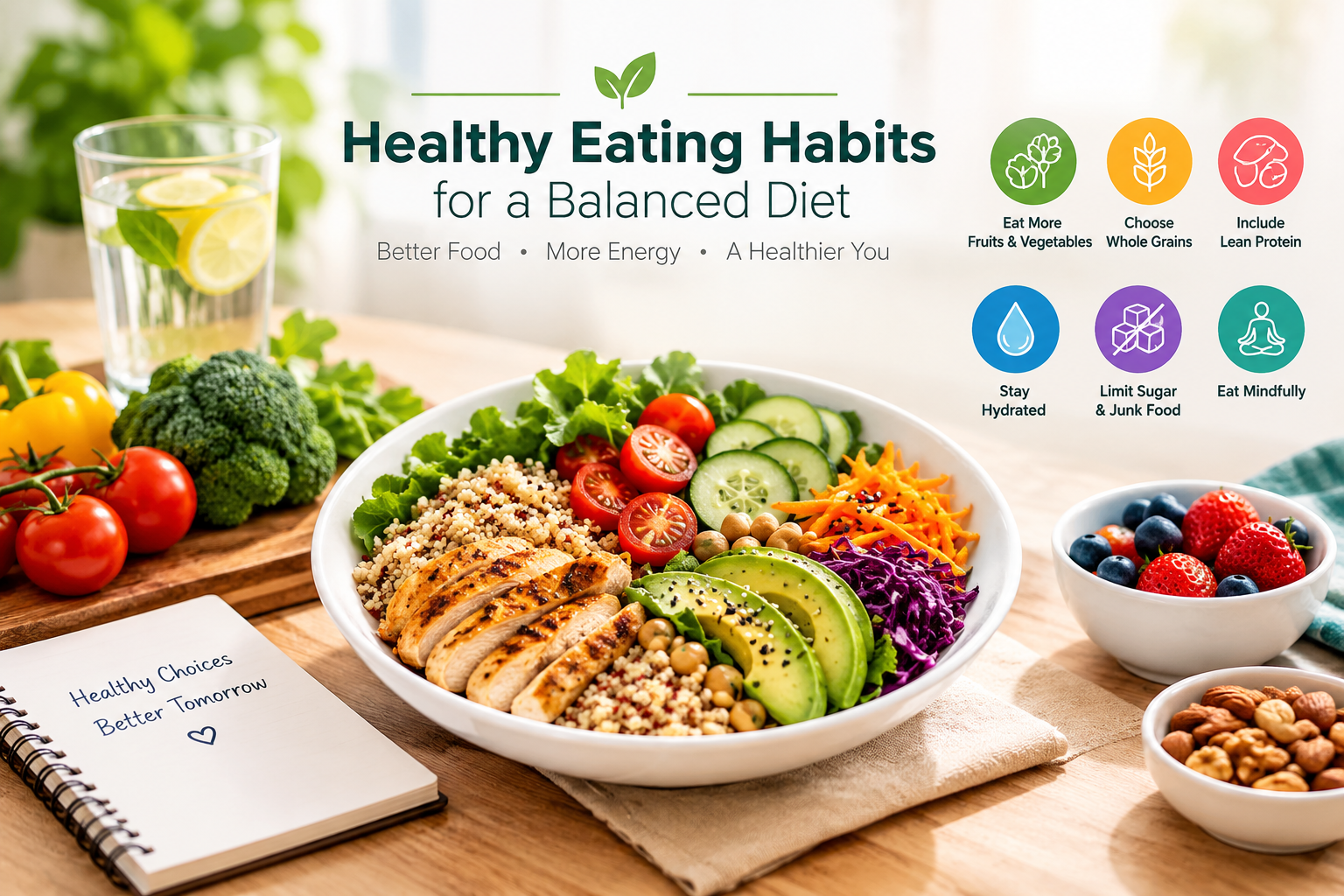
A balanced diet is about the overall pattern of meals, not making every plate perfect. These practical habits can help:
- Include different colors: Eat a variety of vegetables and fruits throughout the week.
- Choose whole grains often: Try oats, whole-wheat roti, brown rice, or other whole-grain foods.
- Include a protein source: Add eggs, fish, lean meat, dairy, beans, chickpeas, or lentils to meals.
- Choose unsaturated fats: Use nuts, seeds, and suitable plant oils in moderate portions.
- Drink water regularly: Adjust fluid intake for activity, weather, and any medical advice.
- Limit highly processed extras: Keep foods high in added sugar, excess salt, and unhealthy fats as occasional rather than everyday staples.
- Plan realistically: Prepare simple meals and snacks that fit your budget, culture, schedule, and preferences.
Nutrition Across Different Stages of Life
Children and teenagers need sufficient energy and nutrients to support growth, learning, and development. Adults benefit from a varied eating pattern that supports daily activity and long-term health. Older adults may need particular attention to protein, calcium, vitamin D, hydration, and adequate overall food intake. Pregnancy, breastfeeding, intensive training, and some medical conditions can also change nutrient needs. Individual needs vary, so professional advice can be helpful when circumstances are specific.
Common Nutrition Mistakes to Avoid
Skipping entire food groups without a reason: This can make it harder to meet nutrient needs. If you follow a restricted diet, plan suitable alternatives.
Believing one food can fix everything: No single food or supplement provides every nutrient the body needs.
Following extreme diets: Very restrictive approaches may be difficult to sustain and may not provide adequate nutrition.
Ignoring individual needs: Allergies, medical conditions, medication, cultural preferences, and budget can all affect what works for you.
Frequently Asked Questions
What is the role of nutrition in overall health?
Nutrition supplies energy and essential nutrients that support growth, tissue repair, immune function, digestion, bones, and many other body processes.
What does a healthy diet include?
A healthy eating pattern usually includes a variety of vegetables, fruits, whole grains, protein-rich foods, healthy fats, and adequate fluids, adjusted to personal needs.
Can good nutrition prevent every disease?
No. Healthy eating can support wellbeing and may lower the risk of some conditions, but genetics, environment, activity, sleep, access to healthcare, and other factors also affect health.
Do I need vitamin supplements if I eat well?
Not everyone needs supplements. Some people may benefit due to a diagnosed deficiency, life stage, restricted diet, or medical condition. Ask a qualified healthcare professional before starting high-dose supplements.
How can I improve my diet on a budget?
Consider affordable staples such as seasonal produce, beans, lentils, chickpeas, oats, eggs, and other foods available locally. Planning meals and using leftovers safely can also help reduce waste.
Final Thoughts
The role of nutrition in overall health is about giving your body the support it needs every day. A balanced pattern of varied foods can help provide energy, support digestion and immunity, maintain muscles and bones, and contribute to long-term wellbeing. Start with manageable changes and build a way of eating that is practical, enjoyable, and sustainable for you.
Health disclaimer: This article is for general educational purposes only and is not a substitute for individualized medical or nutrition advice.
More Related Nutrition Guides from Fitorax
Explore these related nutrition guides to learn more about balanced eating: