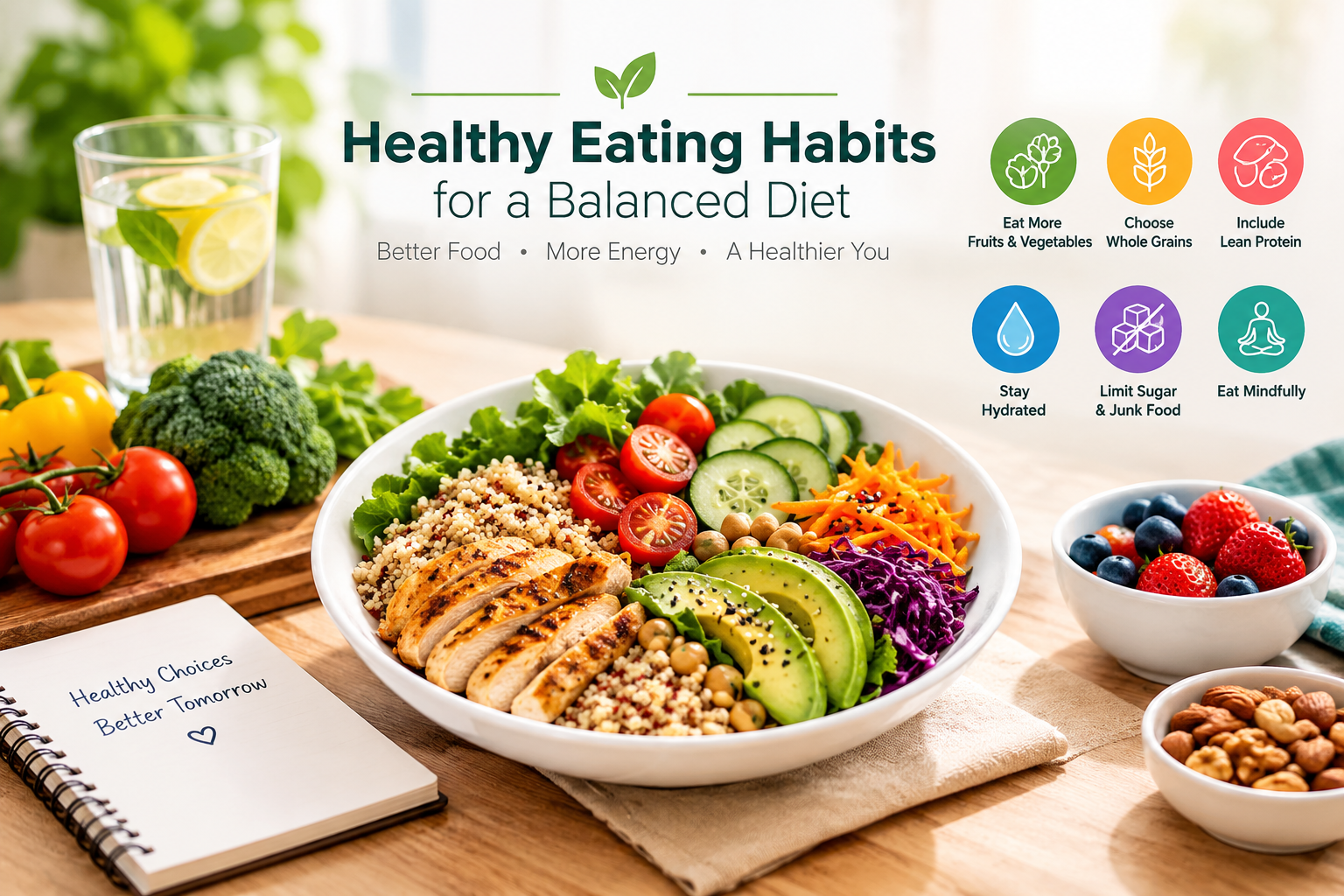
Healthy eating does not mean following a strict diet, giving up every favourite food, or trying to eat perfectly every day. It means choosing a variety of nourishing foods most of the time and building habits that support your energy, health, and everyday life. A balanced diet can help your body get the nutrients it needs while making meals satisfying and enjoyable.
If you are trying to improve your eating habits, start with small changes you can repeat. You do not need to change everything at once. This guide explains the basics of a balanced diet and shares practical ways to make healthy eating easier at home, at work, and when you are busy.
What Is a Balanced Diet?
A balanced diet includes a variety of foods that provide carbohydrates, protein, healthy fats, vitamins, minerals, fibre, and water. Your needs depend on factors such as age, activity level, health, and personal circumstances, so there is no single meal plan that suits everyone.
A useful starting point is to include vegetables and fruit, whole grains, protein-rich foods, and sources of healthy fats across your meals. You do not have to achieve the perfect balance on every plate. Aim for variety over the course of the day and week.
1. Eat More Vegetables and Fruit
Vegetables and fruit provide vitamins, minerals, fibre, and other helpful plant compounds. Try to include different colours and types throughout the week. Fresh, frozen, and canned options can all fit into a healthy eating pattern. When choosing canned varieties, look for fruit packed in water or juice and vegetables with little or no added salt where possible.
Add fruit to breakfast, keep washed vegetables ready for snacks, or include a side salad with lunch or dinner. If you are not used to eating many vegetables, begin by adding one extra serving a day and build from there.
2. Choose Whole Grains More Often
Whole grains contain more of their natural fibre and nutrients than refined grains. Options include oats, brown rice, whole-wheat bread, whole-grain pasta, and other minimally processed grains. Fibre supports digestion and can help meals feel more satisfying.
You can make a gradual switch by mixing brown rice with white rice or choosing whole-wheat bread for some meals. Choose grains you enjoy and can afford; consistency matters more than buying special or expensive products.
3. Include Protein in Your Meals
Protein helps the body build and repair tissues and supports many essential functions. Useful sources include beans, lentils, chickpeas, eggs, fish, chicken, lean meat, milk, yoghurt, tofu, nuts, and seeds. Plant-based proteins can be affordable, versatile, and rich in fibre.
Try adding eggs to breakfast, lentils or beans to lunch, or fish, chicken, tofu, or chickpeas to dinner. Vary your protein sources to make meals interesting and to benefit from a wider range of nutrients.
4. Do Not Fear Healthy Fats
Fat is an essential part of a healthy diet. Unsaturated fats found in foods such as nuts, seeds, avocados, and olive or other plant oils can be useful choices. Fat also helps the body absorb certain vitamins.
Pay attention to portions because fats are energy-dense, but there is no need to eliminate them. Use a small amount of oil in cooking, add a sprinkle of seeds to porridge, or enjoy a handful of nuts when suitable for your needs.
5. Pay Attention to Portions and Hunger
Portion needs vary from person to person. Instead of relying on rigid rules, serve a reasonable amount, eat at a comfortable pace, and notice your hunger and fullness cues. Eating without distractions when possible may help you recognise when you have had enough.
You can start with a simple plate approach: fill about half your plate with vegetables and fruit, include a protein source, and add grains or other starchy foods. Adjust the amounts to your appetite, activity, culture, and individual needs. This is a flexible guide, not a strict requirement.
6. Drink Enough Water
Water supports temperature regulation, digestion, circulation, and other body functions. Needs differ depending on activity, weather, diet, and health. Keep water available during the day and drink regularly, especially in hot weather or when you are physically active.
Unsweetened tea and other drinks can contribute to fluid intake, but water is a practical everyday choice. If you have been advised to limit fluids for a medical reason, follow your healthcare professional’s guidance.
7. Plan Meals to Make Healthy Eating Easier
Meal planning can reduce last-minute decisions and help you use food before it goes to waste. You do not need an elaborate weekly schedule. Choose a few meals, make a short shopping list, and prepare ingredients that can be used in more than one dish.
For example, cooked beans can be used in a salad one day and a curry or soup another day. Chopped vegetables can be added to eggs, rice, or sandwiches. Keep simple options available for busy days, such as fruit, yoghurt, oats, eggs, canned beans, and frozen vegetables.
8. Limit Excess Added Sugar, Salt, and Highly Processed Foods
Many packaged foods can be part of a balanced diet, and convenience foods can be helpful when time is limited. However, regularly consuming large amounts of added sugar or salt can make it harder to follow a healthy eating pattern. Compare nutrition labels when available and choose lower-sugar or lower-sodium options where practical.
You can make gradual changes: choose water more often instead of sugary drinks, flavour food with herbs and spices, and enjoy sweets in portions that fit your overall pattern. Healthy eating is about the habits you build over time, not guilt over a single meal.
9. Make Breakfast and Snacks Work for You
There is no one breakfast routine that everyone must follow. If breakfast suits your appetite and schedule, choose something satisfying, such as oats with fruit and yoghurt, eggs with whole-grain toast, or beans with whole-wheat roti. If you prefer eating later, focus on meeting your nutritional needs across the day.
Snacks can help bridge the gap between meals when you are hungry. Try fruit, unsweetened yoghurt, nuts, roasted chickpeas, or vegetables with hummus. Choose snacks based on your hunger, preferences, and access to food rather than eating by strict rules.
10. Build Habits You Can Maintain
Lasting progress usually comes from realistic routines rather than short-term restriction. Set one or two manageable goals, such as adding vegetables to lunch or preparing meals at home a few more times each week. Keep track of what helps, and adjust your plan when your schedule changes.
Enjoying food is important too. Cultural dishes, family meals, celebrations, and favourite foods can all have a place in a balanced lifestyle. Avoid labelling foods as morally good or bad; focus instead on variety, frequency, and the overall pattern of your diet.
A Simple Example of a Balanced Day
Breakfast: Oats with milk or yoghurt and fruit, or eggs with whole-grain toast.
Lunch: Lentils, beans, chicken, or another protein with vegetables and rice or whole-wheat roti.
Snack: Fruit, yoghurt, or a small handful of nuts if you are hungry.
Dinner: Fish, tofu, beans, or chicken with vegetables and potatoes, rice, or another grain.
This is only an example. Adjust foods and portions to your preferences, budget, culture, and nutritional needs.
Common Healthy Eating Mistakes to Avoid
- Changing everything at once: Start with small, repeatable steps.
- Skipping meals to compensate: Choose a routine that supports your energy and hunger needs.
- Following extreme diets: Very restrictive plans may be difficult to maintain and may not provide all the nutrients you need.
- Expecting instant results: Habits take time to develop, and progress is not always linear.
- Comparing your diet with others: Food needs, budgets, health conditions, and routines differ.
Conclusion
Healthy eating habits are built through everyday choices, not perfection. Eating a variety of vegetables and fruit, choosing whole grains more often, including protein, using healthy fats, drinking water, and planning simple meals can help you create a balanced eating pattern. Begin with one change that feels realistic and repeat it until it becomes part of your routine.
If you have a medical condition, food allergy, a history of disordered eating, or specific nutrition needs, consider seeking advice from a qualified healthcare professional or registered dietitian. Personalised guidance can help you choose an approach that is safe and suitable for you.
Health information on Fitorax is for general educational purposes and is not a substitute for individual medical advice.
More Related Nutrition Guides from Fitorax
Explore these related nutrition guides to learn more about balanced eating: