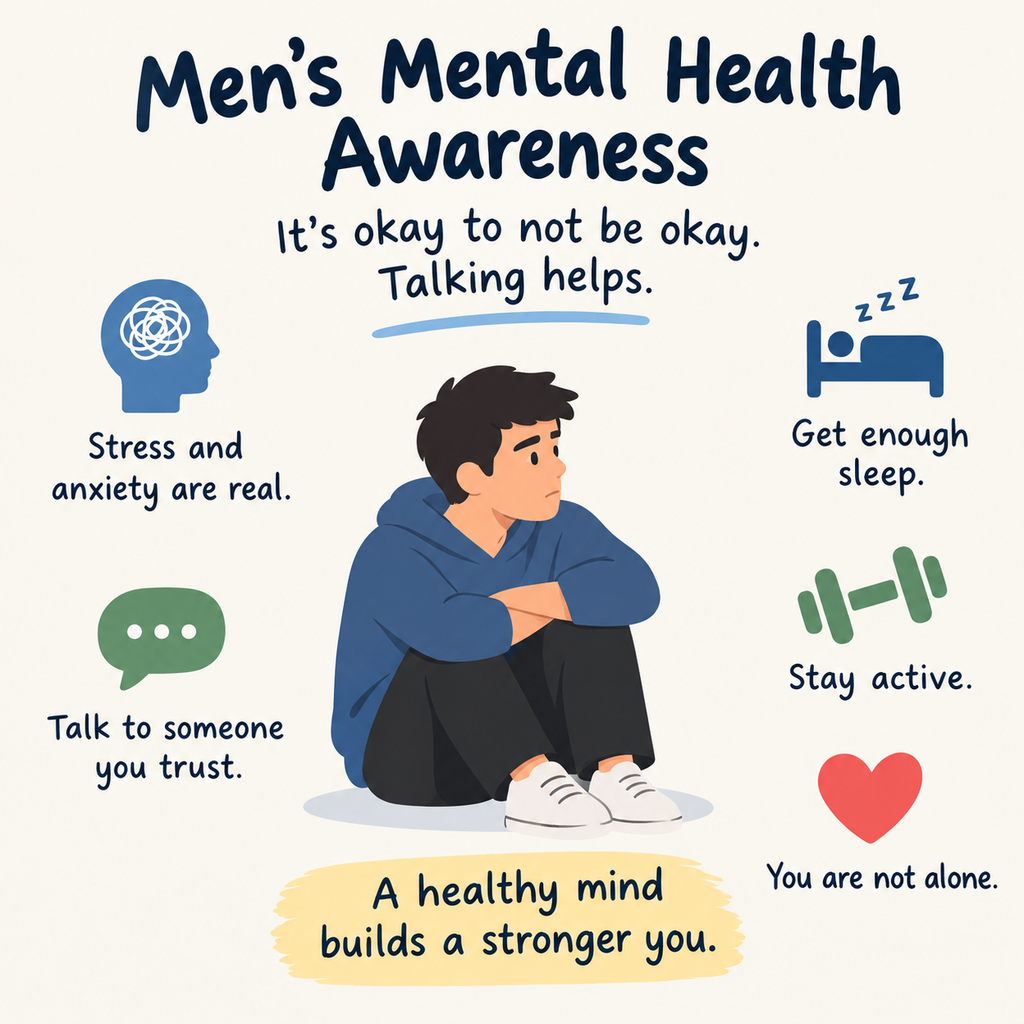
Mental health is an important part of everyone’s life, but when we talk about men’s health, mental well-being is often forgotten. People usually focus on physical health, exercise, diet, and diseases, while emotional health receives much less attention. Men can experience stress, anxiety, depression, loneliness, and many other emotional challenges, just like anyone else. The difference is that many men do not feel comfortable talking about these problems.
From childhood, many boys hear phrases like “be strong,” “don’t cry,” or “handle it yourself.” Although these words may be intended to encourage confidence, they can sometimes make men feel that showing emotions is unacceptable. As a result, some men hide their feelings and continue dealing with problems on their own.
Men’s mental health awareness is important because no one should feel ashamed of asking for help.

What Is Men’s Mental Health?
Mental health refers to a person’s emotional, psychological, and social well-being. It affects how we think, feel, behave, handle stress, and interact with other people.
A man may have a good job, a loving family, and a successful life but still struggle with his mental health. Mental health problems are not always visible. Someone who looks happy on the outside may be experiencing serious emotional difficulties inside.
Many different situations can affect a man’s mental health. Financial problems, work pressure, relationship difficulties, family responsibilities, unemployment, loneliness, major life changes, and personal disappointments can all contribute to stress and emotional problems.
Sometimes, there is no single obvious reason. A person may simply begin feeling tired, unhappy, or disconnected from life.
Depression in Men
Depression is one of the most common mental health problems. It is more than simply feeling sad after having a bad day. Depression can affect a person’s thoughts, emotions, behavior, sleep, appetite, energy, and interest in everyday activities.
Men experiencing depression may lose interest in hobbies they once enjoyed. They may avoid friends and family, have difficulty concentrating, or feel tired most of the time. Some men may also become unusually angry, impatient, or frustrated.
Because depression can appear differently in different people, it is important not to assume that someone is fine simply because they do not appear sad.
Getting professional support can help people understand what they are experiencing and find appropriate ways to manage it.
Anxiety and Stress
Everyone experiences stress from time to time. A certain amount of stress can even motivate us to complete important tasks. However, constant stress can become difficult to manage.
Men may worry about their jobs, finances, health, family, relationships, or future. When worry becomes excessive or continues for a long time, it may affect daily life.
Anxiety can cause both emotional and physical symptoms. A person may feel restless, nervous, tense, or unable to relax. They may also experience difficulty sleeping, headaches, a racing heartbeat, or trouble concentrating.
Learning healthy ways to manage stress is important. Exercise, good sleep, relaxation, social support, and professional guidance can all be helpful.
Why Do Men Avoid Talking About Mental Health?
One of the biggest challenges is the stigma surrounding men’s mental health.
Many men are taught that they should be independent and solve their problems without help. Some worry that their friends, family, or coworkers will judge them if they admit they are struggling.
Others may not even recognize that they are experiencing a mental health problem. Instead of saying they feel depressed or anxious, they may simply say that they are tired, stressed, angry, or frustrated.
This is why conversations about men’s mental health are so important. Men should know that asking for help does not make them weak. It simply means that they are taking their health seriously.
Warning Signs to Notice
Mental health problems can affect everyone differently, but there are some signs that may indicate a person is struggling.
These can include:
- Constant sadness or hopelessness
- Losing interest in hobbies and activities
- Avoiding friends and family
- Feeling tired most of the time
- Major changes in sleeping habits
- Changes in appetite or weight
- Difficulty concentrating
- Increased anger or irritability
- Feeling overwhelmed by everyday responsibilities
- Using alcohol or drugs to cope with emotions
One or more of these signs does not automatically mean that someone has a mental health condition. However, persistent or worsening changes are worth discussing with a healthcare professional.
How Can Men Improve Their Mental Health?
Taking care of mental health does not always require major changes. Small, healthy habits can make a difference.
Stay Physically Active
Exercise is good for both the body and mind. Walking, running, swimming, cycling, playing sports, or going to the gym can help people stay active and manage stress.
Get Enough Sleep
Sleep gives the body and brain time to recover. Adults generally need around seven to nine hours of sleep each night. Creating a regular sleep routine can support energy, concentration, and emotional well-being.
Eat a Balanced Diet
Food affects overall health, including mental well-being. Eating a variety of vegetables, fruits, whole grains, proteins, and healthy fats can provide the nutrients the body needs.
Stay Connected
Spending time with people who care about you can reduce feelings of loneliness. A conversation with a close friend or family member can sometimes provide comfort during a difficult period.
Make Time for Yourself
Life can become busy with work and family responsibilities. Making time for hobbies, relaxation, nature, music, reading, or other enjoyable activities can help create a healthier balance.
The Importance of Talking
Sometimes, the most important step is simply talking.
A man does not need to have all the answers before speaking about his problems. He can start with someone he trusts. It could be a friend, family member, teacher, counselor, doctor, or another supportive person.
Friends and family can also play an important role. Instead of ignoring changes in someone’s behavior, they can gently ask how the person is doing and listen without judgment.
Sometimes people do not need immediate advice. They simply need someone who will listen and remind them that they are not alone.
Professional Support
There are times when professional help is necessary. If stress, sadness, anxiety, or other emotional problems continue for a long time or begin affecting work, relationships, sleep, or everyday activities, speaking with a qualified healthcare or mental health professional can be an important step.
Mental health professionals can help people understand their experiences and identify appropriate treatment or coping strategies.
If someone feels that they may hurt themselves or cannot stay safe, immediate help from local emergency services, a crisis service, or a trusted person is important.
Building a Healthier Attitude Toward Men’s Mental Health
Changing attitudes about men’s mental health starts with ordinary conversations. Parents can teach boys that emotions are normal. Friends can support one another without judgment. Workplaces can encourage healthy working environments. Communities can provide information and access to mental health services.
Most importantly, men should know that they do not have to hide every struggle.
Being strong does not mean pretending that everything is fine. Sometimes strength means recognizing a problem, talking about it, and accepting support.
Conclusion
Men’s mental health deserves the same attention and care as physical health. Depression, anxiety, stress, loneliness, and other mental health challenges can affect men at any stage of life.
The first step toward change is awareness. When men feel safe talking about their emotions, they may be more willing to seek help when they need it.
A healthy life is not only about having a strong body. It is also about having a healthy mind, meaningful relationships, and the freedom to express emotions.
Men should never feel ashamed of saying, “I’m struggling.” Sometimes, that simple sentence can be the beginning of getting the support they need.
Mental health is part of health, and taking care of it is not a weakness. It is a sign that you value your life, your relationships, and your future.