FITORAX • NUTRITION EXPLAINED
Calorie Deficit Explained: A Beginner-Friendly Guide
Understanding energy balance can help you make informed choices—without turning every meal into a math problem.
The phrase calorie deficit appears frequently in weight-loss advice, but what does it actually mean? A calorie is a unit used to measure the energy provided by food and drinks. Your body uses energy to keep you alive, digest food, move, and complete daily activities. A calorie deficit occurs when, over time, you take in less energy than your body uses.
How Does a Calorie Deficit Work?
Energy balance describes the relationship between energy intake and energy use. If energy intake is consistently lower than energy expenditure, body weight may decrease over time. However, bodies are not calculators with perfectly fixed numbers. Energy needs can change with body size, activity, age, health, and other factors, and weight naturally fluctuates from day to day.
This is why a calorie estimate should be treated as an approximation, not a personal rule. You do not need to calculate every bite to build healthier habits, and a very large deficit is not automatically better.
Start With Food Quality and Meal Balance
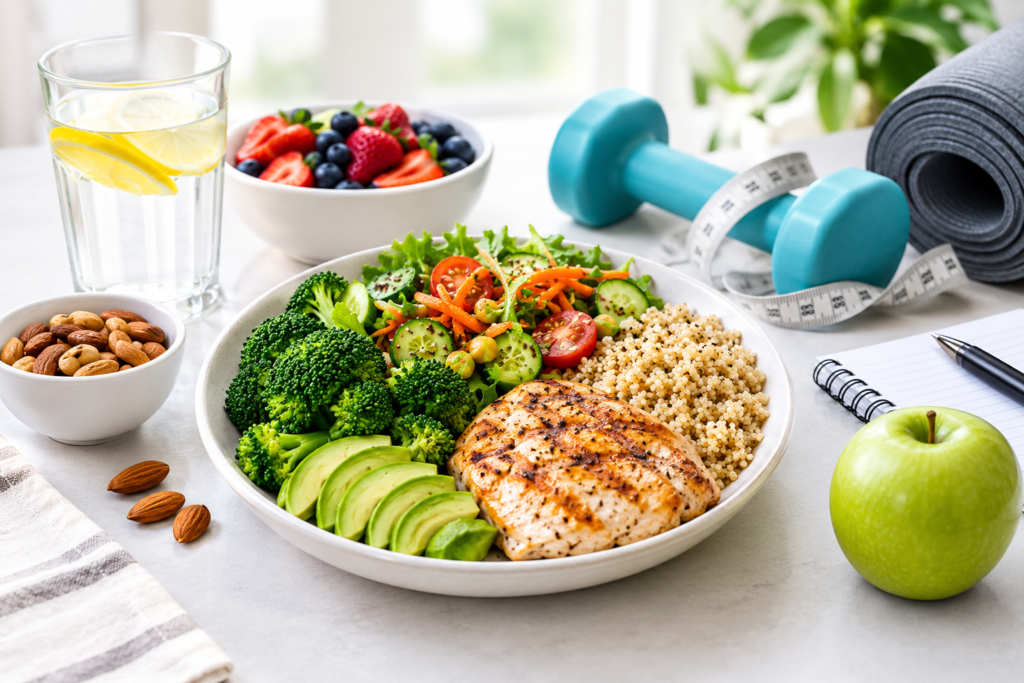
A practical approach is to build meals that provide enough nourishment and keep you satisfied. Include protein-rich foods, vegetables and fruit, high-fiber carbohydrates, and sources of healthy fats. These foods supply protein, fiber, vitamins, minerals, and other nutrients that support health.
- Protein foods: beans, lentils, eggs, fish, poultry, tofu, or yogurt.
- Fiber-rich choices: vegetables, fruit, oats, whole grains, and pulses.
- Balanced carbohydrates: rice, roti, potatoes, oats, and whole-grain bread can fit into an overall eating pattern.
- Drinks: choosing water or unsweetened drinks more often may help if sugary drinks are a regular part of your day.
No single food causes weight loss by itself. The overall pattern, portions, personal needs, and consistency matter more than labeling foods as forbidden.
Use Portions as One Helpful Tool
Portion awareness can help you understand what feels satisfying. Try eating from a plate rather than straight from a large package, slowing down when possible, and checking in with your hunger and fullness. These are optional tools, not rules everyone must follow. If counting calories causes anxiety or obsessive thoughts about food, it may be better to use habit-based goals and seek professional guidance.
Movement Supports Overall Health
Walking, cycling, dancing, swimming, and strength exercises can all contribute to physical health. Choose activities you enjoy and can do safely. It is not necessary to “earn” food through exercise or to compensate for a meal with a punishing workout. Rest and recovery are also part of a healthy routine.
Start with manageable activity and build gradually. If you have a chronic condition, are recovering from an injury, or are unsure what exercise is safe for you, speak with a healthcare professional.
Why Extreme Calorie Cutting Can Backfire
Eating far too little can make it harder to get essential nutrients and may cause fatigue, dizziness, poor concentration, or other problems. Very restrictive plans can also be difficult to maintain and may contribute to an unhealthy relationship with food. Be cautious of online calculators, detoxes, and programs that promise fast or guaranteed results.
People have different energy needs. Children and teenagers, pregnant or breastfeeding people, athletes, and people with certain medical conditions may need specific guidance. If you need a calorie target, a registered dietitian or qualified healthcare professional can help assess what is appropriate for you.
A Habit-Based Way to Begin
Focus on These Four Habits
- Eat regular, balanced meals that meet your needs.
- Include protein and fiber-rich foods to help meals feel satisfying.
- Choose enjoyable movement and reduce long periods of sitting when possible.
- Support your routine with sleep, stress management, and realistic planning.
Review how these habits affect your energy, hunger, mood, and daily life. Adjust gradually instead of trying to change everything at once. Sustainable progress should support your well-being, not make you feel constantly deprived.
Frequently Asked Questions
Is a calorie deficit necessary for weight loss?
In general, sustained weight loss involves an energy deficit over time. However, people do not all need to count calories to manage their weight, and individual health needs matter.
Can I eat carbohydrates while in a calorie deficit?
Yes. Carbohydrates such as fruit, beans, whole grains, rice, and roti can fit into a balanced eating pattern. Overall intake and nutritional quality are more important than avoiding one food group.
Should I choose the biggest calorie deficit possible?
No. Extreme restriction can be unsafe and difficult to maintain. A qualified professional can help you choose an approach appropriate to your circumstances.
Final Thoughts
A calorie deficit is a way to describe energy balance, not a reason to ignore hunger or nutrition. Combine a basic understanding of energy intake with balanced meals, enjoyable movement, and habits that fit your life. If you need an individualized plan, get support from a qualified healthcare professional.
Why Calorie Needs Are Different for Everyone
Your body uses energy for basic functions such as breathing, circulation, temperature regulation, and tissue repair, as well as digestion and movement. The amount you need is influenced by age, body size, muscle mass, activity, health status, and life stage. Energy use can also change as body weight and daily routines change. Online calculators may provide estimates, but they cannot fully account for every individual factor.
Because of these differences, it is not appropriate to assume that one calorie target is right for every reader. Avoid copying a target from a friend or social media post. If a specific energy plan is medically appropriate for you, a registered dietitian or healthcare professional can help estimate your needs and review whether you are getting enough nutrients.
Understand Food Labels in Context
Nutrition labels can help you compare similar products, but the number of calories is only one part of the picture. Consider serving size, protein, fiber, sodium, added sugars, and the nutrients that matter for your needs. A product with fewer calories is not automatically more nourishing or more satisfying. Whole foods and packaged foods can both fit into a balanced eating pattern.
Serving sizes printed on a label describe the reference amount used for the information; they do not necessarily tell you how much you personally should eat. Use labels as one source of information rather than a strict rulebook.
Energy Balance Is Dynamic, Not Perfectly Predictable
The relationship between calorie intake and body weight is more complex than a simple daily equation. Appetite, activity, fluid balance, digestion, and changes in body composition can influence what happens over time. The scale may rise or fall temporarily even when your general routine is stable. This is one reason short-term changes should not be interpreted as a precise measure of fat loss or gain.
If you choose to track intake, remember that estimates are imperfect and that tracking is optional. For some people it provides useful information; for others it increases anxiety or encourages overly restrictive behavior. You can focus on regular meals, food variety, movement, and sleep without counting every calorie.
Warning Signs That Your Plan Is Too Restrictive
Persistent dizziness, faintness, unusual weakness, difficulty concentrating, intense fear around meals, or feeling compelled to compensate for eating are reasons to pause and seek professional advice. Severe restriction can compromise nutrition and well-being. If food tracking or weight goals begin to dominate your thoughts, consider speaking with a healthcare professional or registered dietitian experienced in eating concerns.
A More Sustainable Way to Use This Knowledge
Use the idea of a calorie deficit as background knowledge, not as pressure to eat as little as possible. Build satisfying meals, make movement enjoyable, get enough rest, and choose routines that fit your life. Review how you feel and seek qualified guidance if you need a personalized plan. Health includes strength, energy, mental well-being, and adequate nourishment—not just a number.
Health note: This content is for general education and does not provide a personal calorie prescription. Seek professional advice before changing your diet substantially, especially if you are under 18, pregnant, have a medical condition, or have a history of disordered eating.
More Related Weight Management Guides from Fitorax
Explore these related guides for practical, sustainable weight management: